
Health and Safety
Our Commitment to Quality, Health, Safety, Security and the Environment (QHSSE)
Doing the right thing is a core value for SouthCoast Wind, which ensures everyone gets home safely, stakeholders’ needs and expectations are met, and the highest quality services are implemented.
To achieve this, SouthCoast Wind will prioritize a safety-first mindset at every project phase, treating our people, communities, and environment with care and always maintaining our commitment to continually improving our management system.
At SouthCoast Wind, QHSSE ownership is visible through demonstrated leadership across the organization and with our contractor partners.
QHSSE Principles
-
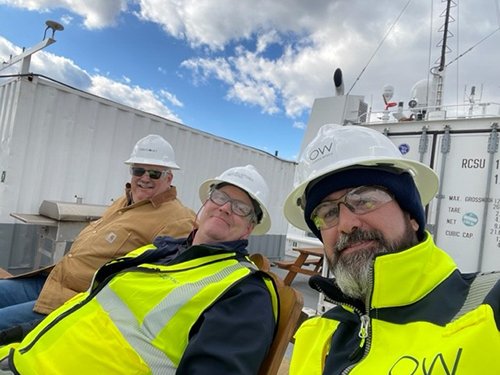 We are responsible for our safety, security, and those of others around us.
 -
We all have the right and responsibility to stop our or another person’s work if it threatens people’s safety or may result in asset or environmental damage.
-
We will manage risks to protect people, the environment, the highest quality of our services and processes, assets, and reputation.
-
We will ensure that a safe system of work is in place so people can manage QHSSE risks, legal requirements, and obligations.
-
We will actively monitor the impact of operations on the environment, especially the most significant ones that can be produced in our activities developed in the marine environment.
-
We will ensure the protection of the environment by working respectfully, preventing pollution, minimizing the environmental effects produced by our activities, and improving the Company’s environmental performance from a life-cycle perspective.
-
We will promote technologies that contribute to the mitigation of climate change and to the sustainable use of natural resources.
-
We will promote effective communications, joint consultation, and cooperation on QHSSE matters to allow employees, stakeholders, and contractor partners to influence our work positively.
-
We will provide direction, training, and supervision to employees and contractors to enable them to discharge their duty to work responsibly and with due consideration for compliance with Ocean Winds QHSSE Policy.
-
We will investigate all adverse events and record and share the lessons learned.
-
We will establish QHSSE objectives and monitor KPIs and incidents to ensure effective action is taken to manage risks and set targets and goals.
-
We will implement and promote a quality philosophy throughout the project through the monitoring of KPIs, timely close out of NCRs and detailed collection and close out of punch list items at each of the significant project milestones.
-
We will conduct regular and specific auditing to ensure continual improvement and compliance and highlight areas of good practice and concern.
-
We will collaborate with industry and other professional associations to continuously advance health, safety, quality, and environmental protection in the offshore wind sector.
-
We will promote consultation and participation of workers and, where they exist, workers’ representatives.
-
We will apply the principle of mitigation hierarchy (avoid, minimize, restore, and compensate as a last resort) in all activities.
-
We will ensure that suppliers and contractors observe the requirements established by Ocean Winds and participate in the safety and quality culture that has been implemented.
-
We will establish cooperation links with customers, communities, industry associations, regulatory bodies, government agencies, and other stakeholders to address health, safety, quality, and security issues in a customer-oriented, responsible, consistent, and transparent manner.
-
SouthCoast Wind expects our employees, contractors, and partners to embrace these principles, assume responsibility for QHSSE, and reflect on them in every aspect of their work.
Life-Saving Rules
SouthCoast Wind recognizes the value of providing clear, simple, and consistent information regarding risks in the workplace and the proper use of barriers and safeguards to protect the workforce. To provide greater clarity and effectiveness, SouthCoast Wind employs Ocean Wind’s Life-Saving Rules. Employees and Contractors and expected to know when and how the Life-Saving Rules apply and the actions they can take to protect themselves and their colleagues.
These rules focus on the activities which, through rigorous data analysis, have been shown to most likely result in fatalities. Each rule consists of an icon and simple life-saving actions individuals can take to prevent a work-related fatality. The Life-Saving Rules exist in order to do exactly what they say: save lives!.
A strong commitment to safety
SouthCoast Wind draws from the deep experience and skills of Ocean Winds in safely constructing and operating energy generation and transmission facilities. Safety is our core value, and we are committed to treating our people, communities, and the environment with care.
SouthCoast Wind uses a systematic approach of measuring, appraising, and reporting our performance to ensure compliance with legal requirements and industry standards and to achieve continuous health, safety, and environmental improvements.
Southcoast, via Ocean Winds, is a key influencing member of various industry safety organizations, such as American Clean Power, the Global Health and Safety Organization for Offshore Wind, and the Global Wind Organization.
While we will examine the safety of all aspects of the project, one topic of community interest is electro-magnetic fields (EMF). We hired an expert consultant, Gradient, to study the potential EMF effects of the cable. They found that there are no safety risks and SouthCoast Wind’s electric cables will operate well below established health guidelines.
Gradient technical reports
Brayton Point Project – Massachusetts
Brayton Point Project – Rhode Island
Fact sheet
Infographic
Video
Meet our Quality, Health, and Safety Manager
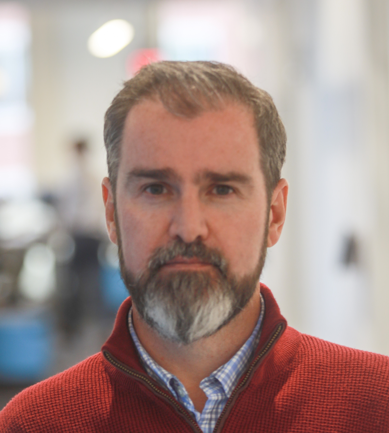
Tom Cassidy, QSHHE Manager, Ocean Winds North America
Leading the charge for all things health and safety for SouthCoast Wind is Tom Cassidy.
Tom holds a master license from the UK Merchant Marines and worked on wind turbine installation vessels for Europe’s earliest offshore wind farms. He then moved into technical and project management roles for wind farm developers, where he was involved in the planning, permitting, fabrication, installation, commissioning, and operation of several projects, including the wind turbine installation at Block Island, RI.